

Ericsson and Softbank have partnered up to develop 6G and other ‘NextWave’ tech
By James Rogerson | 31 Mar 2025
Ericsson and Softbank want to leave their mark on the mobile networks of the future, and to that...


While 6G is still a way off we already know much of what to expect from it, and the upgrades it offers over 5G could be truly transformative for society.
6G promises to deliver a giant leap in download speeds, potentially topping out at anywhere from several hundred gigabits per second (Gbps) to over 1 terabit per second (Tbps).
Already in fact researchers at Keysight Technologies have achieved a download speed of 1.04Tbps, but that’s in lab conditions, so real world speeds may well be lower. That’s where the several hundred gigabits figure comes in, with Ericsson – one of the major players in 6G development – predicting that we could see real world speeds in that region.
To put that into context, it’s almost unheard of to get 5G speeds of above 1Gbps in the UK – with average speeds being more in the region of 100-250 megabits per second (Mbps). So, if 6G tops out at several hundred Gbps then its peak speeds will be hundreds of times faster than the peak speeds we’re getting on real-world 5G networks, and thousands of times faster than average 5G speeds.
And if in fact 6G actually achieves 1Tbps speeds outside of a lab – which is rather less likely but may not be impossible – then the difference between 5G and 6G becomes dramatically larger.
In either of those scenarios – or even a far more conservative one – that would mean with 6G you’d be able to download 4K movies and massive games almost instantly.

High speeds aren’t much good if you don’t have a signal, but 6G promises to address that too, with near comprehensive coverage being a realistic achievement for it – and not just in the UK, but globally too.
This would be achieved though not just with masts and other ground-based infrastructure – it would also require low-Earth orbit satellites (like those Starlink uses) to plug coverage gaps.
And of course, this won’t be a day-one thing as it will take a while for networks to provide widespread 6G coverage. But ultimately this could mean you’ll be able to get a signal not just in towns and cities but also reliably on roads, trains, deep in the Scottish Highlands, and even in deserts and jungles.
That means you’ll always be able to stay in touch with the people that matter, get online, and – if needed – contact emergency services, so this could be an upgrade that saves lives too.
Right now, with 5G – and older technologies – there are still plenty of rural locations in the UK that don’t have signal on every network – and some that can’t get a connection on any. So 6G should eventually bring an end to that.
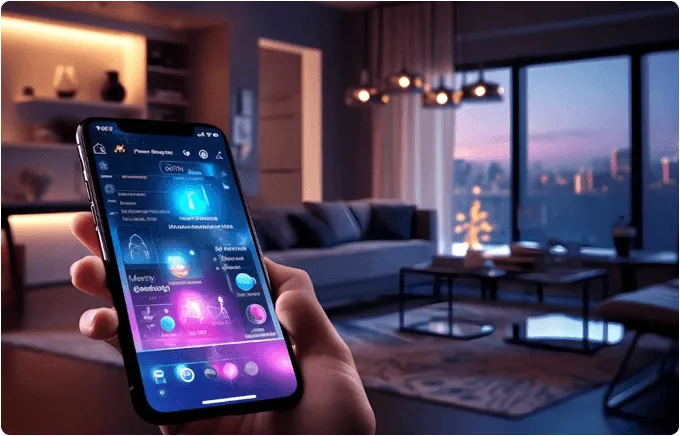

So 6G will be faster than 5G and has the potential to deliver far greater coverage, but it will also probably be more reliable.
That’s in large part because there is expected to be a greater quantity of spectrum available for it than for 5G or 4G, leading to improved capacity.
Extra capacity means that you’ll be able to reliably get and maintain a connection even in busy places – like stadiums, airports, festivals, and city centres – where thousands of other people are also trying to get online.
So, no more wondering why your internet has cut out in the heart of London, or being unable to call your friends at Glastonbury festival.
Of course, the increased coverage promised by 6G should aid reliability too, and so will some new technologies that we expect 6G networks to leverage. These include AI algorithms that can predict problems before they happen, and Cell-free Massive MIMO (Multiple-Input Multiple-Output) – a network technology that means your device won’t have to perform a cellular ‘handover’ as you move between masts.
.webp)
Along with impressive raw speed, 6G is also expected to offer dramatically lower latency than 5G networks.
TechTarget claims that with 6G, one-microsecond latency (meaning 1,000 times faster than 1 millisecond (ms) latency) might one day be viable.
Given that 5G networks tend to have a latency of roughly 30ms, that means 6G has the potential to have around a 30,000 times lower latency than 5G.
We’d take this figure with a pinch of salt, and it’s unlikely to be achieved on day one regardless, but even if we end up with a massively more conservative latency reduction, that will benefit competitive online games – where instant responses to your inputs are vital.
And super low latency will be even more important for self-driving cars and other automated or connected devices that require split-second response times.
.webp)
While 6G is sure to improve all the things we already use 5G for, it’s also expected to enable entirely new use cases and technologies – and to play a key part in the adoption of AI systems.
The high speed, low latency, and impressive capacity and coverage promised by 6G makes it ideal for powering robots, autonomous vehicles, smart factories, and more, so that they can get a reliable and fast connection wherever they may be.
Many of these systems will be managed by AI – so 6G will be directly beneficial to AI too – and of course, 6G’s reliability means it will also be ideal for running complex AI tasks on your phone or laptop when away from Wi-Fi – or for that matter if your Wi-Fi network can’t match what 6G is capable of.
All these characteristics of 6G will also allow it to power other futuristic technologies, like true holographic telepresence – so for example rather than video calls, you could speak to life-size holographic images of your friends, family, and colleagues.
6G will likely also enable mass-market mixed reality, and the ‘Internet of Senses’ – the latter of which promises to allow online interactions to include touch, smell, and taste, allowing you for example to see how the fabric feels before buying clothes online.
By James Rogerson | 31 Mar 2025
Ericsson and Softbank want to leave their mark on the mobile networks of the future, and to that...

By James Rogerson | 01 Apr 2025
AI – used responsibly – has the potential to enhance almost every element of our lives, and...
By James Rogerson | 02 Apr 2025
By Simon Thomas | 13 May 2025
By James Rogerson | 26 Feb 2026

We use cookies on this site to enhance your user experience. For a complete overview of all cookies used, please see our Privacy Policy